
Case Study: How We Rebuilt an Underperforming Website Into a Lead Engine
A well-run business with a website that quietly undersold it. Here is how we rebuilt it around speed, clarity, and conversion, and what changed once the digital front door finally matched the work behind it.

Hans Allí
Case Study: How We Rebuilt an Underperforming Website Into a Lead Engine
A good business, undersold by its own website
When this client came to us, they had the problem we see most often in Philippine businesses that are genuinely good at what they do. Strong reputation, loyal clients, excellent work. And a website that told none of that story. Built years earlier, it was slow, dated, and awkward on a phone. Worst of all, it was not bringing in the leads a growing business needed.
The referrals kept coming, but the website was losing people at the digital front door. Prospects searched, landed, and left. The contact form was buried, the services were unclear, and the whole experience felt disconnected from the quality of the actual work. They did not need a fresh coat of paint. They needed a website that worked as a lead generation tool.
Discovery: find out what is actually broken
We start every project with an audit, because we would rather make decisions from evidence than from taste. Before we designed anything, we pulled the old site apart.
The picture was consistent. Most visitors left after a single page. The site loaded far too slowly on mobile, well past the three-second point where people start abandoning. It was not built for phones, which was the real problem given that most of the traffic came from them. The homepage and service pages had no clear next step. The contact form asked for far too much before anyone had a reason to trust it. And the SEO foundation was thin: no structured data, weak meta descriptions, and no content to pull in organic traffic.
We also looked hard at five direct competitors. The strongest ones shared the same traits: clean modern design, a clear value proposition above the fold, obvious calls to action, fast load times, and an active blog earning search traffic. That told us exactly where the gaps and the opportunities were.
Strategy: design for conversion, not applause
Everything we decided served one of three priorities: speed, clarity, and conversion.
Speed. We moved the site to Webflow for built-in performance, CDN hosting, and automatic image compression, and set an aggressive mobile load target.
Clarity. We restructured the architecture so a visitor understood what the company does, who it serves, and how to reach it within the first few seconds on any page. Service pages were rewritten to lead with benefits, not jargon.
Conversion. We rebuilt the journey around deliberate calls to action. We cut the contact form down to the few fields that actually matter. We added a sticky header with a "Get a Quote" button on every page. And we brought trust signals forward: client logos, testimonials, and project highlights placed where they do the most work.
Design and development
The design brief was simple: make the site look as good as the work is. We went clean and modern, with generous white space, professional photography, and a restrained palette that reads as trust and expertise.
A few decisions carried most of the weight. A homepage hero with a clear headline, supporting line, and a single primary action above the fold. Service pages ordered benefits first, then process, then proof, then a clear next step. A portfolio section with filterable categories and results-focused summaries. And a stripped-back footer with contact details, quick links, and a secondary call to action. We built it in Webflow, tested it across devices and browsers, implemented structured data for local SEO, optimized every image, and set up analytics with proper conversion tracking.
What changed after launch
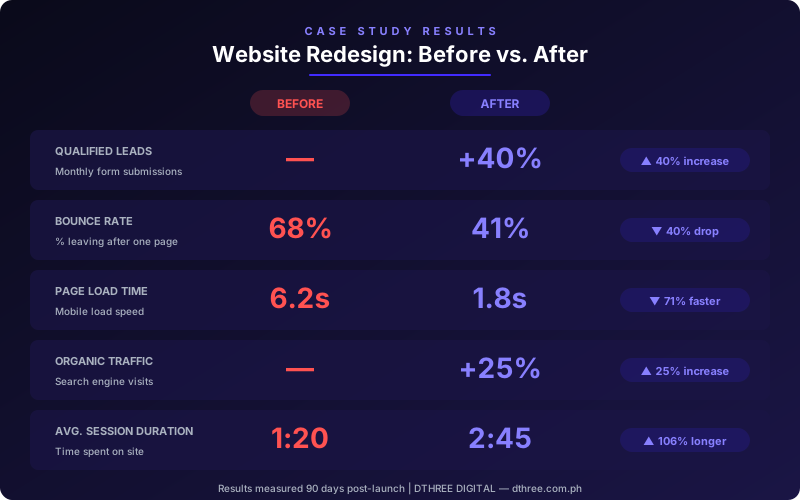
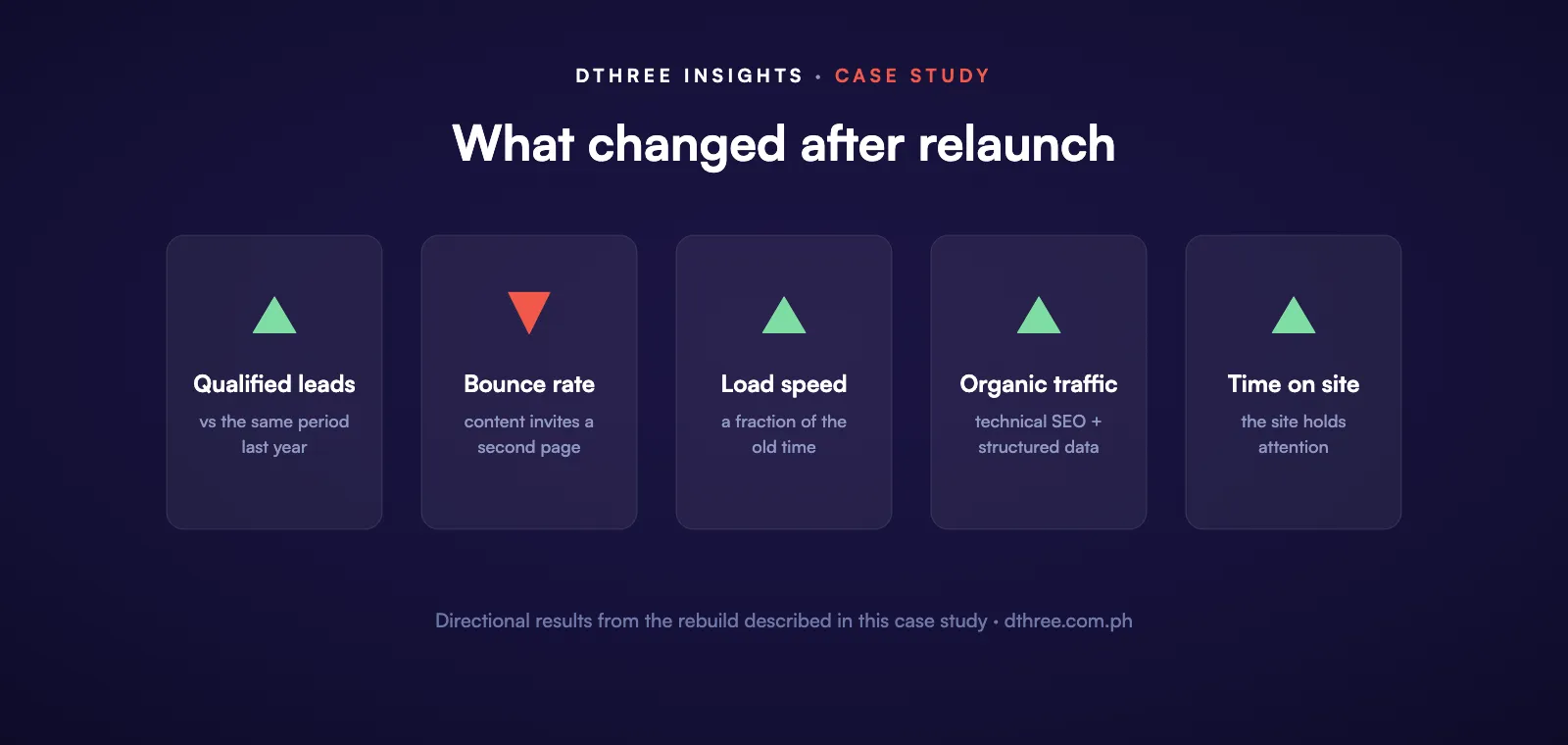
The difference showed quickly. Qualified leads rose against the same stretch of the previous year, which was the number that mattered to the client, and it came straight from the simpler form, the clearer messaging, and the calls to action people could actually find. Fewer visitors bounced, because the content was organized to invite a second and third page. The site loaded in a fraction of its old time, which mattered most for the phone-first majority. Organic traffic grew as the technical SEO, structured data, and new service content took hold. And people stayed longer, a quiet signal that the site was finally holding attention instead of losing it.
What this means for your business
A few principles held here that hold almost everywhere.
Speed is not a technical detail, it is a business one. A slow site costs you leads directly, and performance is one of the highest-return improvements you can make. If you are weighing the investment, our guide on what a website costs in the Philippines breaks it down.
Clarity converts. Nobody should have to work to understand what you do or how to reach you. The clearer the message and the calls to action, the more leads the site generates.
Data should drive design. The audit and competitor analysis gave us concrete targets. Without that foundation, redesigns become subjective exercises that look different without performing better.
The platform matters. Moving to Webflow bought us performance that would have been slower and costlier to reach on the old setup.
Is your website due for the same?
If your site is more than three years old, drags on mobile, or is not bringing in the leads your business deserves, a strategic redesign is worth a serious look. Dthree Digital builds results-driven website redesigns for Philippine businesses. Explore our services or talk to us about your project.


.avif)