
What Happens After You Reach Out: How a Dthree Project Actually Starts
Filling out a contact form can feel like signing up for a sales chase. Here is exactly what happens when you reach out to Dthree: one call, one scoped proposal, one clear kickoff. No pressure, no mystery, and you talk to a co-founder from the first conversation.

Hans Allí
What Happens After You Reach Out: How a Dthree Project Actually Starts
The form nobody wants to fill out
Most people sit on a website inquiry longer than they sit on the website problem itself. Not because the project isn't urgent, but because a contact form feels like the start of something unpredictable: a sales sequence, a hard pitch, a quote that arrives without context. We understand the hesitation. We've been on that side of the form too.
So here is the honest, complete answer to the question behind the hesitation: what actually happens after you press send on our contact form. It is three steps, and none of them commit you to anything.
The short version
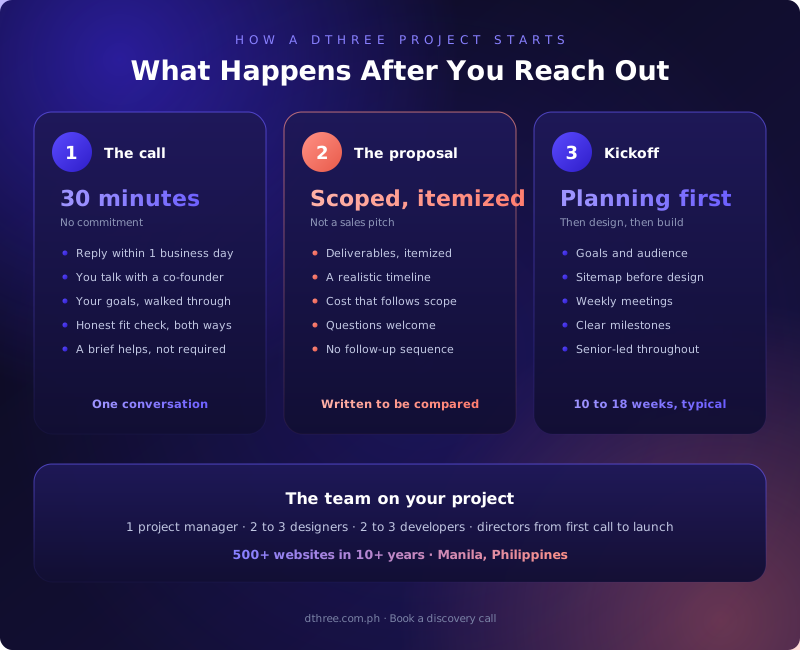
First, we reply within one business day and set up a 30-minute call. Second, once we understand the project, you get a scoped proposal: deliverables, timeline, and cost. Third, if you say yes, we kick off with planning, not pixels. That's the whole machine. The rest of this post is what each step looks like from your side.
Step 1: A 30-minute call with a co-founder
When your message arrives, a person reads it, not a pipeline. We reply within one business day, usually to set a short online call at a time that works for you. If you'd rather move everything over email, that works too, and if you have an RFP prepared, send it along.
The call itself runs about 30 minutes to an hour. You will be talking with our directors, the co-founders who lead the work, not a sales team working a script. The agenda is simple: introductions on both sides, a walk through what you need, and a discussion of what would make the project succeed. You should leave the call knowing whether we're the right fit, and we tell you honestly when we're not. Some projects need a different kind of partner, and we'd rather point you in the right direction than win the wrong engagement.
Come with whatever you have. A clear brief is great; a vague sense that the current site is holding you back is also a perfectly good starting point. Diagnosing that gap is part of what the call is for.
Step 2: A scoped proposal, not a sales pitch
After the call, we put together a quotation based on what we learned: the pages and features involved, the platform that fits, the level of service you need, and a realistic timeline. If we're missing detail, we ask before we quote. A number without context helps nobody, least of all you.
The proposal is written to be compared. Deliverables are itemized, the timeline is honest, and the cost reflects the scope we discussed rather than a template rate. If you want to understand the market before that conversation, our guide to website costs in the Philippines lays out the ranges we quote within, publicly.
There is no follow-up sequence waiting behind the proposal. Take it to your team, question it, come back with changes. Scope moves before contracts do.
Step 3: Kickoff, and what the first weeks look like
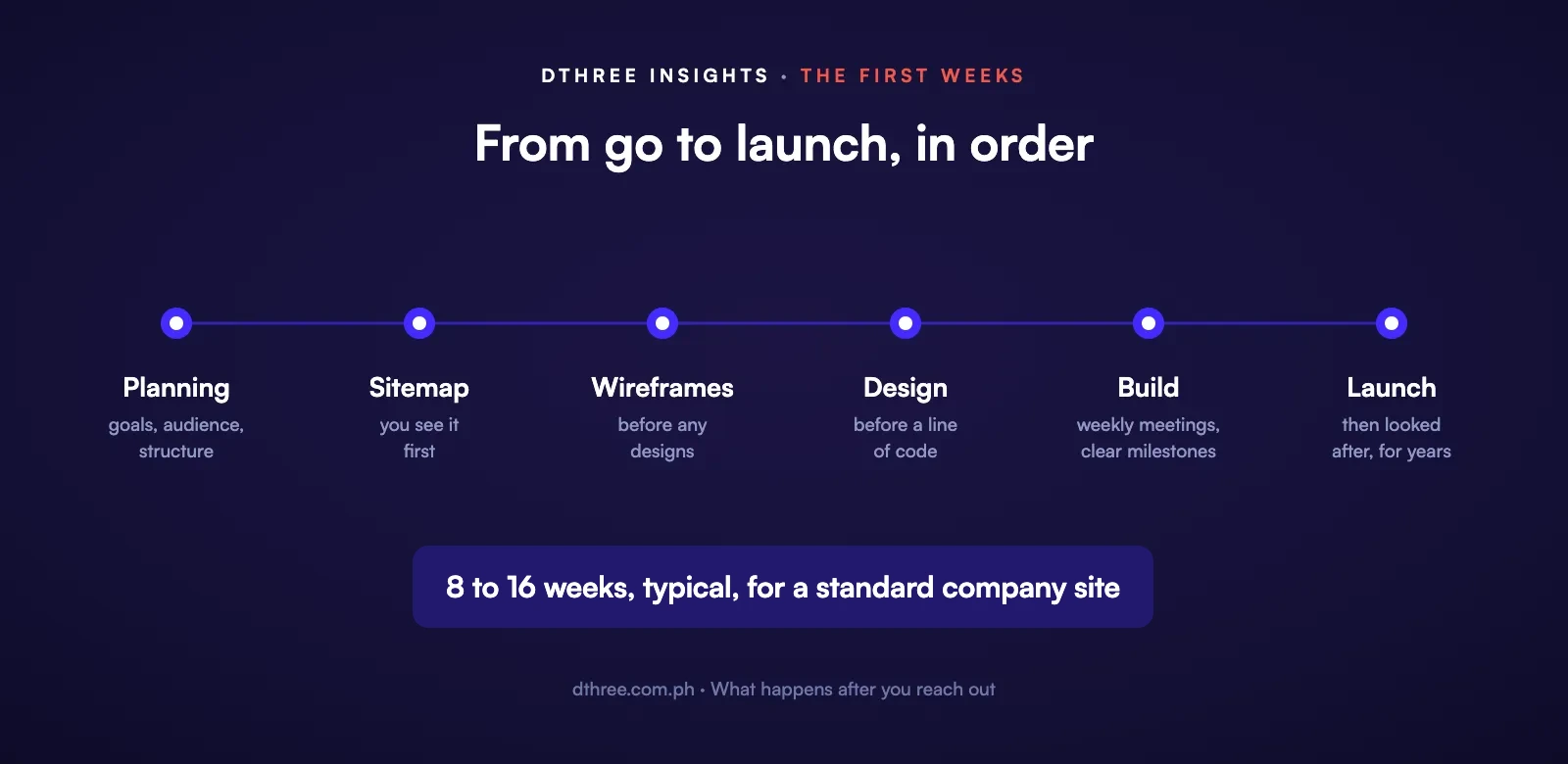
When you give the go, the project starts with discovery and planning, not design. We align on goals, study your audience, and map the site's structure before anyone opens a design file. It is the least glamorous phase of the project and the one that decides how well everything after it goes.
From there the work runs on a steady rhythm: weekly meetings, clear milestones, and deliverables you review at each stage. You see the sitemap before the wireframes, the wireframes before the designs, and the designs before a line of code. A standard company website typically takes 8 to 16 weeks from planning to launch, provided feedback and alignment stay on schedule. Larger builds take longer, and we tell you that upfront rather than discovering it together in month four.
Who actually does the work
For a standard build, your project team is one project manager, two to three designers, and two to three developers, with the directors staying involved from first call to launch. Senior people lead every engagement; that's a structural choice, not a slogan. We build on WordPress, Drupal, Webflow, Shopify, and Magento, and we recommend the platform that fits your project rather than the one we feel like building that month.
After launch, most clients stay on monthly maintenance and support, so the same team that built the site keeps looking after it. A decade in, with more than 500 websites delivered, the pattern is consistent: the projects that pay back are the ones that are scoped honestly, built once, and looked after by a team that is still around a year later.
What we need from you
Not much at the start. Someone who can speak for the organization's goals, a sense of your timeline, and honesty about your budget range. Content readiness matters more as the project moves, and we flag it early because unready content is the most common cause of delay. If you have brand guidelines, existing analytics, or an old site with lessons in it, bring them; if you don't, that's what discovery is for.
The whole point
A website project should not begin with uncertainty. You now know what the first call covers, who sits across the table, what the proposal contains, and how the first weeks run. The only unknown left is your project, and that's the part we'd genuinely like to hear about.
Book a discovery call. Thirty minutes, no commitment, and you'll talk directly with a co-founder. If a call isn't your speed, browse our work or read the answers to our most common questions first. We'll be here when you're ready.


.avif)